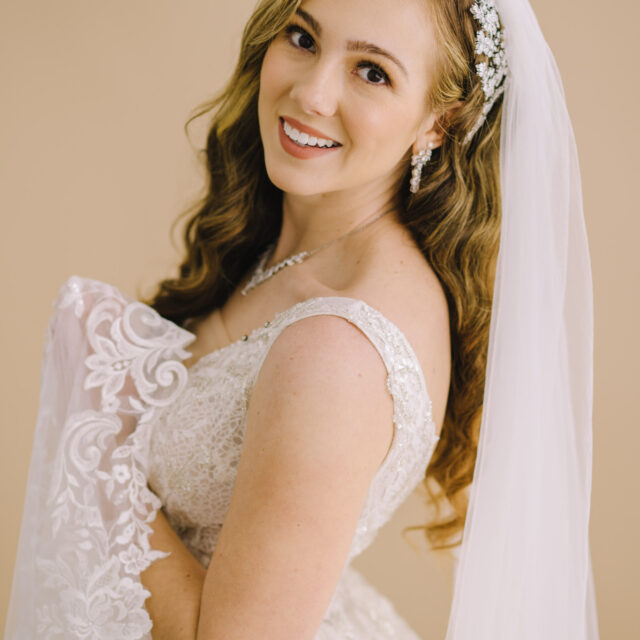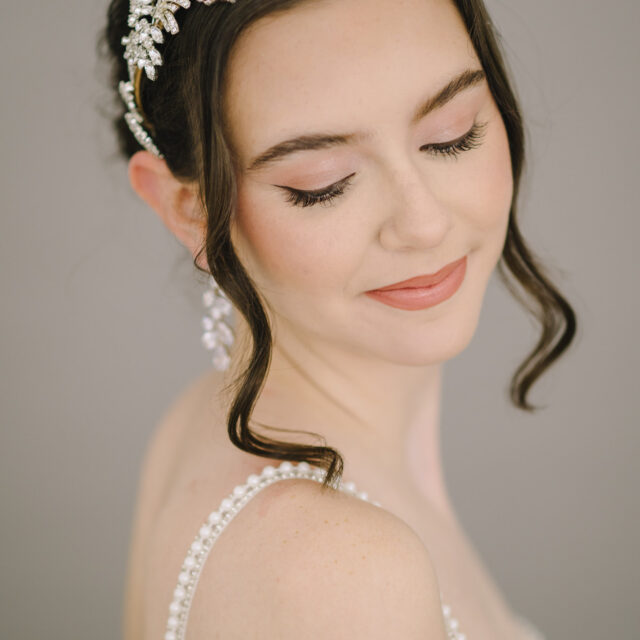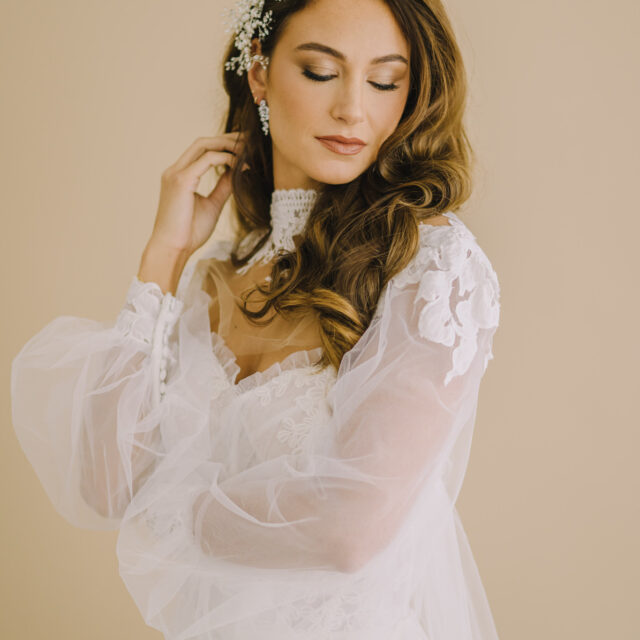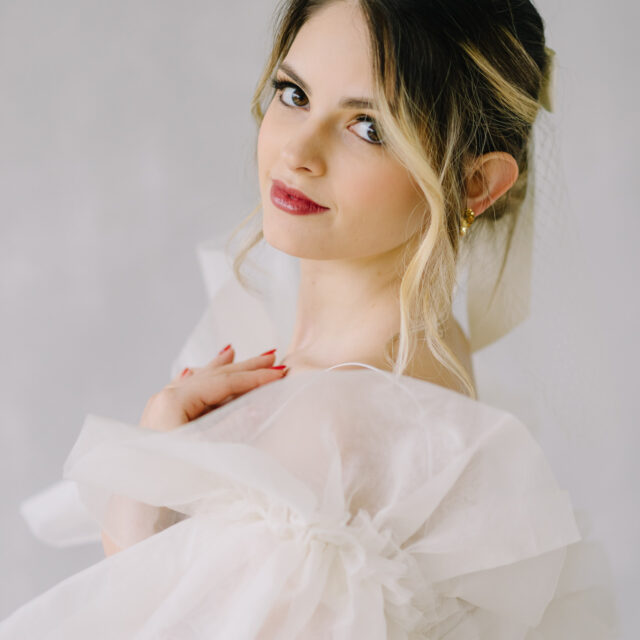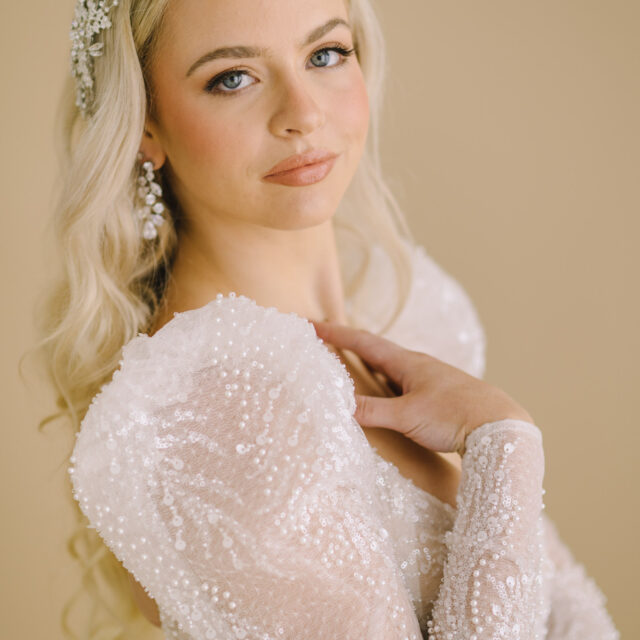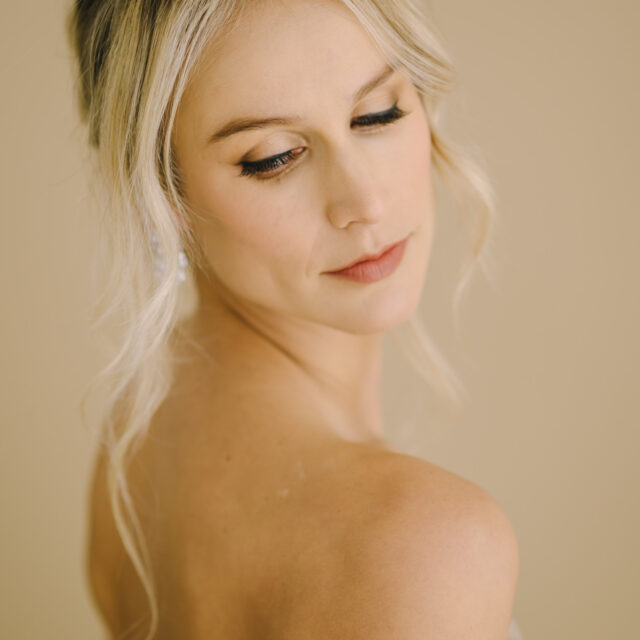

Spring wedding makeup in Houston is being asked to do one thing above everything else this year: look like almost nothing, and hold anyway. Brides booking March through May 2027 dates keep describing the same finish — skin that reads as skin, color that sits in the cheeks rather than on the eyes, and hair with its structure hidden inside it. The requests have gotten quieter. The engineering underneath them has not.
That tension is the whole story of a Gulf Coast spring. A March ceremony can start in the fifties and a May reception can sit near ninety with the air thick enough to feel, and the look has to survive both without being rebuilt between the first look and the last dance.
What’s driving spring 2027
Three things are shaping what brides are asking for, and none of them are strictly about beauty.
The first is photography. Editorial wedding photography has moved toward film and film emulation, which is forgiving of texture and unforgiving of heavy powder. A matte, fully built face that looked correct in a mirror ten years ago now reads flat and slightly older on camera. Brides are seeing that in their friends’ galleries and arriving at trials with a specific ask: don’t make me look covered.
The second is the calendar. Spring is Houston’s most contested wedding season alongside October, which means more Saturday weddings, more early call times, and more bridal parties splitting an artist’s morning. Looks that take forty minutes to build and twenty to fix are quietly falling out of favor in favor of ones that take thirty and hold for twelve hours.
The third is the weather, which in this metro is not a footnote. Between oak and pine pollen in March, the first real humidity in April, and afternoon storms that arrive without much warning in May, spring makes demands on a wedding-day look that a dry-climate trend piece simply doesn’t account for.
Five things Houston brides are asking for this spring
1. Skin that looks like skin
The dominant request, by a wide margin. Not “no makeup” — brides who say that in a trial almost never mean it — but a finish where the skin’s own texture still shows through: a satin surface, powder only where it earns its place, and coverage built in layers where it’s actually needed instead of edge to edge.
Who it suits: nearly everyone, though it asks more of skin prep than a fuller finish does. Skin that’s been hydrated and gently exfoliated in the weeks before will hold this; skin treated for the first time three days out will not. The American Academy of Dermatology is a sane starting point for building a routine that won’t surprise you, and anything new belongs in the calendar at least six weeks before the date.
How it photographs: beautifully in daylight and in film-style work, which is where most of a spring wedding lives. It does need a defined base — a skin-like finish is not the same as a thin one, and photographers’ flash at the reception will find any spot where the coverage gave up.
2. Blush doing the work the eye used to do
Color has migrated. Brides who would have asked for a smoky eye three years ago are asking for a soft, diffused wash of blush carried high onto the cheekbone and sometimes lightly across the nose, with the eye kept warm and simple. It photographs as health rather than as makeup, and it reads much younger.
Who it suits: anyone who wants to look like herself in the photos her mother will frame. It’s particularly good for outdoor daytime ceremonies, where strong eye makeup can go heavy in direct sun.
The caution is longevity. Cream blush is what makes this look convincing and it’s also the first thing humidity takes. Layering a cream under a matching powder is the difference between color that lasts through the ceremony and color that’s gone by the time you’re back down the aisle.
3. A defined lash line instead of a strip lash
Full strip lashes haven’t disappeared, but the requests have shifted toward individual clusters placed only on the outer third, or no lash at all with the lash line tightlined and the natural lashes worked properly. The result is an eye that looks open in close-ups without the small giveaway shadow a strip casts in daylight.
Who it suits: brides having a first look outdoors, anyone who has had a lash lift, and anyone who has spent a reception worrying about a corner lifting. It suits less well if you want obvious drama in low-light reception photography, where a fuller lash still earns its keep.
4. Hair with structure hidden inside it
The silhouette is soft — low chignons that sit at the nape, half-up styles with real weight in them, and waves that look air-dried and are anything but. What’s changed is what’s underneath: pinning and prep built for a humid room, because the undone look collapses faster than a tight one when moisture gets into it.
This is the single request where the Houston climate should change your decision. A brushed-out wave that photographs perfectly at a 4 p.m. indoor ceremony in Sugar Land can be a different shape entirely by the time you’re outside for portraits at golden hour. If your ceremony, cocktail hour and portraits are moving between air conditioning and open air — which describes most spring weddings here — the style needs to be built with that in mind from the start, not rescued later.
Veils change it too. Where the comb sits determines whether the style survives the veil coming out, and that decision belongs at the trial rather than on the morning.
5. Bridal parties that coordinate without matching
Brides are moving away from an identical look across eight people. The current ask is a shared register — same finish, same general depth of color, same lash weight — with each person’s features actually accounted for. It photographs as a group rather than as a uniform, and it makes the bride read as the bride without anyone being underdone.
It also has a practical benefit worth knowing when you’re building a getting-ready timeline: a shared register is faster to execute across a large party than a set of individually negotiated looks, which is what keeps a morning on schedule.
What to skip this spring
An honest note, because trend posts rarely include one.
Heavy contour under natural light. Sculpting that looks correct in a bathroom mirror at 7 a.m. reads as a gray stripe in an outdoor ceremony at 2 p.m. If your ceremony is outside, contour should be warm rather than cool and considerably lighter than feels right in the chair.
Very high-coverage matte foundation. It’s the most common reason a bride doesn’t recognize herself in her own photos, and in Houston humidity it tends to break around the nose and chin by the reception anyway.
Anything new in the final month. New actives, a first facial, lash extensions you haven’t worn before, a brow lamination three weeks out. Spring pollen already makes some skin more reactive than usual here; adding an untested variable to that is a risk with no upside.
Glitter and heavy shimmer on the eye for a daytime ceremony. It photographs as texture rather than shine in direct sun, and it migrates in heat.
When to book for a spring 2027 wedding
Most Houston brides book hair and makeup eight to twelve months ahead, and spring dates go earlier than that range suggests because the season is short and heavily concentrated in Saturdays. If your wedding is in April or early May 2027, you are in the window right now, and the popular weekends are the ones that close first.
A few things worth building into the plan:
- Trial timing. Two to four months out is the useful window to book a bridal trial: recent enough that your hair length and skin are close to what they’ll be, early enough to change direction or change artists.
- Bring the real inputs. Your veil or hair accessory, a photo of the dress neckline, and two or three images of finishes you like on someone with your coloring. Images of a look on very different skin or hair are the most common reason a trial goes sideways.
- Count the party honestly. Eight people getting hair and makeup is a materially different morning than four, and it’s the number that determines your call time more than anything else.
- Have a rain plan for the beauty timeline, not just the ceremony. Spring storms move the schedule around here often enough that it’s worth knowing in advance what shifts if portraits move indoors.
- Know your service area. Mobile service across Houston, Richmond, Sugar Land, Katy and The Woodlands means travel time is part of the timeline; a 6 a.m. start in one part of the metro is not the same as a 6 a.m. start in another.
Reliable local forecasting from the National Weather Service Houston/Galveston office is worth checking the week of, particularly for outdoor ceremonies in May.
Spring wedding makeup in Houston: quick answers
Does makeup actually last in Houston humidity?
Yes, when it’s built for it. Longevity comes from prep, product choice and setting technique rather than from more coverage — a heavier face is not a longer-lasting one. A trial run in similar conditions is the only real way to know how yours will hold.
Is airbrush better for a spring wedding?
Airbrush holds up well in heat and humidity and photographs cleanly, but it isn’t automatically the right answer for a skin-like finish, which is what most brides are asking for this season. It’s a decision to make at the trial based on your skin and the look you want, not in advance. See the full comparison of airbrush and traditional foundation for the detail.
How far ahead should I book for a spring date?
Eight to twelve months for a spring 2027 wedding, and sooner for an April or early-May Saturday. Booking later is workable, but it narrows the choice to whoever happens to still be open.
Should my bridesmaids do their own makeup?
They can, and some prefer to. The thing to know is that it changes how the group photographs — differences in finish and depth show up in a line-up far more than they do in a mirror.
Planning a spring 2027 wedding in the Houston area? Check available dates for your weekend before the spring calendar fills.